

Are Cooling Blankets Safe? An In-Depth Look
Cooling blankets have quietly become one of the more talked-about sleep products in recent years. Hot sleepers love them. People managing night sweats swear by them. But whenever something claims to change how your body feels during sleep, the obvious question comes up: is it actually safe? Here's a thorough look at what these blankets do, what to watch out for, and how to use one without any issues.
How Do Cooling Blankets Work Safely?
The way a cooling blanket functions depends on what it's made from and how it's constructed. There isn't one single method different products use different approaches, and some combine more than one. Here are the four most common mechanisms:
Phase change materials (PCMs)
Think of PCMs as tiny heat sponges embedded in the fabric. They're substances that absorb a large amount of heat as they melt from solid to liquid, then release that heat gradually as they return to solid form. When your body starts running hot, the PCMs in the blanket pull in that excess warmth. When you cool back down, they give it back slowly. The net effect is a sleep surface that stays more consistently comfortable than a standard blanket ever would.
Breathable, moisture-wicking fabrics
A lot of the overheating that happens during sleep isn't about temperature at all - it's about trapped moisture. Lightweight fabrics like cotton, bamboo, and certain polyester blends let air flow through rather than blocking it. They also draw sweat away from the skin surface quickly, so you're not lying in a warm, damp microenvironment all night.
Conductive cooling
Certain blankets are made with materials that actively conduct heat graphite and ceramic particles are two examples. Rather than simply allowing heat to escape, these materials pull warmth away from the body and redistribute it across the blanket's surface or release it into the air around it.
Evaporative cooling
This one works like a fan on a warm day. Some cooling blankets include a layer that can be lightly dampened before you get into bed. As that moisture evaporates through the night, it carries heat away from the body. No electricity required. Works particularly well in drier conditions.
Are Cooling Blankets Safe for Regular Use?
For the vast majority of people, yes. Used correctly, cooling blankets are considered safe for regular use. But there are a few specific situations worth knowing about.
1. Avoid Extreme Cold
A cooling blanket is designed to moderate your temperature, not drive it down dramatically. If you're using one alongside ice packs or other cooling devices at the same time, you risk pushing your body temperature too low. Hypothermia - where the body loses heat faster than it generates it - is a genuine risk if you overdo it. Keep it simple. Follow the product instructions and don't stack cooling methods without talking to a doctor first.
2. Be Cautious with Certain Health Conditions
People managing poor circulation, diabetes, or nerve disorders sometimes have a reduced ability to sense temperature accurately. If you can't reliably tell when something is too cold against your skin, a cooling blanket introduces a risk you wouldn't otherwise have. If any of those conditions apply to you, check with your doctor before buying one.
3. Infants and Young Children
This one's a firm no. Infants and toddlers can't regulate their own body temperature the way adults can, and they can't tell you if they're getting too cold. Both of those facts make cooling blankets genuinely dangerous for this age group. The risks include hypothermia and in the case of babies - an increased association with SIDS. Stick to age-appropriate bedding and check with a pediatrician if you're unsure about what your child needs at night.
Safety of Electric Cooling Blankets
Electric versions work differently from passive fabric-based ones, and with electricity involved, the safety checklist gets a bit longer:
- Go over the blanket before each use looking for damage, fraying, or exposed wires
- Never use it while it's folded, bunched up, or sitting in heavy creases heat builds up unevenly and that creates risk
- A hot water bottle and an electric blanket in the same bed is a combination to avoid
- Wet hands or feet touching the blanket don't do it
- Pins don't belong anywhere near electric blankets; same goes for sharp objects of any kind
- The manufacturer's guide isn't optional reading follow it
Potential Benefits of Cooling Blankets
When everything's used correctly and the right person is using them, cooling blankets may offer a few genuinely useful benefits:
- Improved sleep quality: Waking up sweaty and overheated is one of the more disruptive sleep experiences going. A cooling blanket doesn't just make the bed feel more comfortable by keeping temperature from spiking, it may help you stay asleep longer without those mid-night wake-ups.
- Relief from night sweats: Whether it's menopause, a medication side effect, or an underlying health condition causing the sweating, the blanket addresses the physical symptom heat and moisture buildup directly. That doesn't treat what's behind the sweating, but it does make nights considerably more liveable.
- Temperature regulation for couples: One person runs hot, the other sleeps cold, and the thermostat becomes a point of ongoing negotiation. A cooling blanket on one side gives the warmer sleeper their own temperature zone without affecting the other person.
- Eco-friendly alternative to air conditioning: An AC unit cooling an entire room all night uses a significant amount of energy. A cooling blanket keeps one person comfortable at a fraction of that cost and without the environmental load.
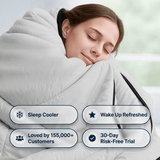
The Comfy Sleepers Cooling Blanket is made from 90% Nylon and 10% Spandex with cotton fill constructed to stay lightweight and breathable across the whole night without becoming a source of extra warmth.
Choosing a Safe Cooling Blanket
The cooling blanket market has plenty of options, and not all of them are equally well-made. A few things worth checking before you commit:
- Stick with brands that are transparent about their materials, their manufacturing, and that have real customer feedback you can actually read
- OEKO-TEX certification matters if chemicals in fabric concern you - it confirms the materials have been tested and cleared of harmful substances
- Care instructions exist for a reason - read them and follow them; how you wash a cooling blanket directly affects how long it keeps working
- Your own situation matters - someone with sensitive skin needs to think about materials differently than someone who doesn't; factor in any allergies or conditions when deciding
Safety Considerations for Different Types of Cooling Blankets
Gel-Infused Cooling Blankets
These contain a gel layer that takes in and disperses body heat. A few things to check:
- Confirm the gel is non-toxic and genuinely hypoallergenic before buying
- Check the gel layer for any damage or leakage before each use
- Follow the care instructions exactly the gel layer isn't as forgiving as regular fabric
Water-Based Cooling Blankets
These circulate water to cool the surface. A bit more involved to manage safely:
- Look the blanket over regularly for leaks water near a sleeping person creates obvious problems
- Any electrical component driving the water circulation needs to meet appropriate safety standards
- Clean the system regularly as specified; stagnant water in any closed system will grow bacteria
Bamboo Fiber Cooling Blankets
Naturally cool and gentle on skin. Still a few things worth confirming:
- Check how the bamboo fibres were processed eco-friendly closed-loop production is preferable to chemical-heavy methods
- Some manufacturers apply chemical treatments after processing; check for those before buying, especially if your skin reacts easily
- Washing instructions for bamboo are specific get this wrong and the cooling properties won't last
Potential Side Effects and How to Avoid Them
Most people use cooling blankets without any issues at all. For a minority, some of the following have come up:
- Skin irritation: Certain fabrics or technologies don't suit every skin type. Hypoallergenic materials reduce this risk significantly, and doing a short patch test before committing to full nightly use is a sensible precaution if your skin tends to react.
- Overcooling: There isn't really a "more is better" principle here. Using the blanket at too low a setting or for too many consecutive hours can cross from comfortable into genuinely cold. Find the right level and use it accordingly.
- Dehydration: When you sleep cooler, you sweat less which sounds like a benefit, and mostly it is. But your hydration habits during the day still matter. Don't let feeling cool overnight create a false sense that you need less water.
- Interference with natural temperature regulation: The body is good at managing its own temperature when it's given the chance to do so. Using a cooling blanket occasionally or as needed is a different situation from becoming reliant on one every single night. Use it as a tool, not a crutch.
Environmental Impact and Safety
The safety question doesn't stop at your own body. The environmental side of cooling blankets is worth factoring in too:
- Energy consumption: Electric models draw power. If yours is electric, an energy-efficient model and disciplined usage habits both reduce the footprint.
- Material sustainability: A blanket made from bamboo, organic cotton, or other plant-based materials has a substantially lower environmental cost from the production side than one made purely from petroleum-derived synthetics.
- Disposal: What happens to the blanket when it wears out matters. Look for brands that use recyclable materials or that have take-back schemes.
Conclusion
Cooling blankets are a safe and practical option for people who sleep warm, provided they're used as directed and the right product is chosen for the right person. The vast majority of users never encounter any issues at all. The considerations around young children, certain medical conditions, and electric blanket safety are genuine, but they're also easy to navigate with a bit of common sense and, where needed, a conversation with a doctor.
If you're unsure whether a cooling blanket is right for your situation, that's exactly what healthcare professionals are for.
FAQs
1. Can I use a cooling blanket year-round?
Yes, absolutely. For anyone who runs warm regardless of the season, or who lives somewhere that stays warm most of the year, a cooling blanket works year-round. You might adjust your other layers with the seasons to find the right overall feel, but the blanket itself doesn't need to be put away.
2. How do I clean my cooling blanket?
Check the manufacturer's care label first that's always the definitive guide for a specific product. Most cooling blankets tolerate a gentle machine wash cycle with mild detergent. Low heat tumble drying or flat air drying are the usual recommendations. High heat is typically the fastest way to damage the cooling properties, so avoid it.
3. Can cooling blankets help with insomnia?
They're not a treatment for insomnia. But overheating is one of the things that disrupts sleep and keeps people awake, and a cooling blanket directly addresses that factor. If your insomnia has other causes - anxiety, sleep apnea, irregular habits a blanket isn't going to solve those. Persistent insomnia needs a proper conversation with a doctor.
4. Are cooling blankets safe for pets?
Products made for humans aren't designed with animals in mind. The sizing, materials, and construction are all built around a person's needs and proportions. If you want something cooling for a pet, look specifically for pet-designed products.
5. How long do cooling blankets last?
Honestly, it depends on the quality of what you bought and how you look after it. A well-made cooling blanket, cared for correctly, typically lasts several years. The signs it's time to replace it are straightforward - visible wear to the materials or a noticeable reduction in how cool it actually keeps you.