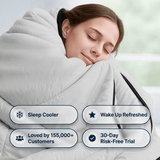


Benefits of Using Cooling Blankets
Cooling blankets stand out because they combine breathable fabrics with temperature-regulating tech that actually makes a difference once you start using them consistently at night. They're usually made from cotton, bamboo, or eucalyptus, and most rely on moisture-wicking materials or phase-change tech to help you stay cool without that sticky feeling.
In this guide, we're looking at the health side of cooling blankets. The good, the not-so-good, and the stuff people usually don't think about before buying one. Honestly, getting your sleep setup right is one of the easiest ways to feel better during the day. It sounds basic. But it matters. Are they a miracle fix for hot sleepers? Not really. But for a lot of people, they help more than expected.
Health Benefits of Using Cooling Blankets
Better Quality of Sleep
Sleep quality improves when your body stays at the right temperature.
Research keeps pointing to the same thing. When your body isn't overheating, you fall asleep faster and stay asleep longer, which is especially helpful if you deal with night sweats, hot flashes, or just that constant "too warm" feeling at night that keeps waking you up.
It's a small shift. But noticeable.
Reducing Night Sweats
Night sweats can ruin a good night quickly.
One of the biggest advantages here is how these blankets handle moisture. The moisture-wicking layers pull sweat away from your skin, so instead of waking up damp and uncomfortable, your bed stays relatively dry.
That alone makes a difference. Understanding how cooling blankets work explains exactly why moisture-wicking fabric is the key feature for anyone dealing with night sweats.
Better Mood and Energy
Sleep affects everything. You already know that.
When your sleep improves, your energy usually follows, and your mood tends to level out a bit instead of feeling off the whole day. A cooler sleep environment helps your body reset properly overnight, which carries into how you feel the next morning.
In practice, it adds up.
Stay Away from Problems with Heat
When you sleep, getting too hot is not only uncomfortable, it's also annoying.
It can sometimes cause problems like dehydration or heat exhaustion, especially in hot rooms or in the summer. Cooling blankets help keep your body temperature in a safer range so your body doesn't have to work as hard to regulate temperature itself at night.
Simple support. Real impact.
Potential Health Drawbacks to Consider
Budgetary Factors
Let's be honest. Price matters.
A high-quality cooling blanket usually costs more than a standard comforter, often somewhere between $100 and $200 for better options, and if you're looking at advanced versions, the price can climb higher depending on the tech involved.
So yeah, it's an investment.
Potential Noise
This part surprises people.
Some high-tech cooling blankets, especially ones with built-in systems, can make slight noise from fans or internal movement. It's not loud. But if you're a light sleeper, even small sounds can be annoying.
Something to think about.
Weight Concerns
Not all cooling blankets feel light.
Some options, especially weighted cooling blankets, are heavier than expected. That's great for some people, but if you already deal with joint discomfort or don't like pressure while sleeping, it might not feel comfortable.
Depends on your preference.
Allergy Risks
Materials matter more than people think.
Even though most fabrics are designed to be skin-friendly, some people still react to certain materials. It could be mild itching or something more noticeable.
So check before buying. These reactions are among the most commonly reported side effects of cooling blankets and are almost always manageable with a simple fabric swap or washing the blanket before first use.
Choosing a Health-Conscious Cooling Blanket
Getting the Size Right
Size sounds simple. But it matters.
You want enough coverage to stay comfortable without the blanket bunching up or sliding off during the night. Also, think about storage, especially if you won't use it year-round.
Picking the Best Material
Material choice affects everything.
You've got options like bamboo, cotton, linen, or synthetic blends. Some are more breathable, some more durable. It really comes down to what feels right against your skin and what works for your comfort level over time.
There's no single "best" option.
Evaluating the Tech
Some blankets are basic. Others are not.
You can go with simple moisture-wicking fabrics or choose more advanced systems that regulate temperature more actively. The higher-end options give more control, but they're not always necessary for everyone.
Keep it practical.
Finding Your Ideal Weight
Weight changes the whole experience.
Some people prefer something light that barely feels there. Others like a bit of pressure, similar to a weighted blanket. If you pick the wrong one, you'll notice pretty quickly.
So choose based on how you actually sleep. Read our guide on how to choose the best cooling blanket to find the right weight, material, and size for your specific sleep style.
Summary: Finding The Best For Better Health
Cooling blankets gives you better sleep and overall comfort with coolness, especially if overheating is something you deal with every night, but they're not a one-size-fits-all solution and won't fix every sleep issue on their own.
The benefits are realistic. But so are the limitations.
Look, the goal is balance. If you understand what you need and choose accordingly, you'll get more out of it. And when your sleep improves, everything else usually follows.
That's the part that matters. Browse our full range of cooling blankets to find the right one for your health and sleep needs.
Frequently Asked Questions
Q1: Does a cooling blanket really work?
Yes - cooling blankets genuinely work for most people who overheat at night. They are not air conditioning and they do not lower room temperature. What they do is use breathable moisture-wicking fabrics that pull heat away from your body rather than trapping it the way standard bedding does. The result is a sleeping surface that stays noticeably cooler than a regular blanket throughout the night rather than warming up quickly from body heat. Most people notice the difference within the first few nights. The effect is strongest when the cooling side faces directly up against the skin, the room has some airflow, and no heavy layers are placed on top of the blanket.
Q2: Are weighted blankets good for lupus?
Weighted blankets may help some people with lupus but the answer depends on the individual. Lupus often causes fatigue, joint pain, and sleep difficulties - and the gentle pressure of a weighted blanket can have a calming effect that helps some people fall asleep faster and stay asleep longer. However lupus also commonly causes heat sensitivity and night sweats, which means a standard heavy weighted blanket could make overheating worse. A lightweight cooling weighted blanket - one that provides gentle pressure without trapping heat - is a more suitable option for people with lupus who want the comfort of weight without the risk of overheating. Always consult your doctor before making changes to your sleep setup if you manage a chronic condition like lupus.
Q3: When should a cooling blanket be used?
Cooling blankets are most useful whenever overheating is disrupting your sleep. The most common situations are during summer months when room temperatures stay high at night, for people who naturally run warm regardless of season, during menopause when hot flashes and night sweats interrupt sleep repeatedly, during illness or fever when the body generates excess heat, and in shared beds where one partner sleeps warmer than the other. They can be used year-round - in summer as a standalone layer and in cooler months layered under a light duvet for warmth without overheating. There is no single right time to use one. If heat is making sleep harder a cooling blanket is worth trying.
Q4: What is the best blanket for menopause?
A lightweight breathable cooling blanket is the most practical choice for managing menopause symptoms at night. During menopause hormonal changes trigger hot flashes and night sweats that disrupt sleep multiple times through the night. Heavy traditional duvets trap heat and make these episodes feel more intense and longer-lasting. A cooling blanket works in the opposite direction - it allows heat to escape rather than building up around the body, feels lighter against the skin, and does not cling when you sweat. Look for moisture-wicking breathable fabric, a lightweight construction that does not press heat against your body, and a smooth surface that stays comfortable even during warm spells. Pairing it with breathable sheets underneath gives the best results for most women going through menopause.