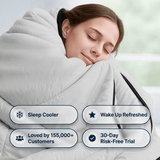


Cooling Blanket Temperature Control Guide & Techniques
Struggling to find the perfect sleep temperature?
Dive into the world of cooling blankets as we uncover the ideal temperature range for a peaceful night's rest.
These blankets are crafted to dissipate body heat, utilizing innovative materials to enhance breathability and prevent nighttime overheating. They maintain a comfortable sleep temperature by wicking away moisture and heat, ensuring a sound night's sleep.
Introduction: Understanding Cooling Blankets
A cooling blanket doesn't make you cold. That's the first thing to get straight.
It works by moving heat away from your body rather than trapping it the way a heavy comforter does. Breathable weaves let air pass through, moisture-wicking fibers pull sweat off your skin so it can evaporate, and some fabrics simply feel cool the moment you touch them because of how the fibers conduct heat. No batteries, no plug, no refrigeration.
Which means the room around it still matters enormously. The blanket manages the small pocket of air right against your body. Your thermostat handles everything else.
Get those two working together and you're set.
The Importance of Maintaining an Optimal Sleeping Temperature
Your body temperature isn't fixed overnight. It drops as you fall asleep, by roughly one to two degrees, and that dip is part of what signals your brain to shift into deeper sleep.
Block that drop and things go wrong quietly. You don't necessarily wake up gasping. You just surface a bit, roll over, drift back, and repeat that all night without registering any of it. Come morning you feel like you barely slept and can't point to why.
Too cold has its own problems. Shivering wakes you just as reliably as sweating does.
So the goal isn't "as cold as possible." It's steady and comfortable.
Ideal Temperature Range for a Cooling Blanket
Since a cooling blanket has no dial, its "temperature" is really the combination of your room, your bedding, and your own body. Three inputs, one result.
Factors to Consider
Personal Preference
People run differently, and it's not a small variation. Some sleep hot year-round and want the room genuinely cold. Others get chilly at 68°F. Age, body composition, hormones, medications, and whether you share the bed all shift where your comfortable point sits.
Climate and Season
Where you live changes the math. Humid summers make the same temperature feel warmer, since sweat evaporates slower when the air's already saturated. Dry heat is easier to manage. Winter flips it entirely, and a cooling blanket that felt perfect in July can feel thin in January.
Recommended Temperature Range
For most adults, the sweet spot lands between 60 and 67°F, with the mid-60s a reasonable starting point.
Some rough guidance:
- Hot sleepers: aim for the lower end, 60 to 63°F
- Average sleepers: 64 to 67°F usually works
- Cold sleepers: 66 to 68°F, paired with a light extra layer
- Humid climates: go a degree or two lower than you think
Start in the middle, then adjust over a few nights. One change at a time, or you won't know what worked.
Adjusting the Temperature
Shift the thermostat by one degree and give it two or three nights before deciding. Bodies adapt slowly, and a single bad night might just be a bad night. Pay attention to how you feel waking up rather than how the bed feels at lights-out, since the first ten minutes tell you almost nothing about hour four.
Techniques to Cool Down
If you're still running warm, these help:
- Use Breathable Fabrics: Pair the blanket with breathable sheets and sleepwear. A cooling blanket over polyester sheets is fighting itself, honestly.
- Open Windows or Use Fans: Moving air speeds up evaporation, which does more than lowering the thermostat a degree. A fan pointed across the bed, not directly at you, works well.
Combine two or three of these and the difference is noticeable.
Techniques to Warm Up
Overshooting the other way is common, especially in winter.
- Layering with Other Blankets: Add a light throw over the cooling blanket rather than swapping it out. You keep breathing and gain warmth.
- Room Heating Options: Nudge the thermostat up a degree, or use a small heater with a timer that shuts off after you're asleep.
The trick is adding warmth without trapping moisture. That's the balance.
Tips for Choosing the Right Cooling Blanket
If you're still shopping, two things matter most.
Material Selection
- Bamboo-derived fabrics: Smooth fibers that move moisture quickly, good for sweat
- Cotton and linen: Breathable naturals, linen especially good in humidity
- Nylon and spandex blends: Often feel coolest to the touch on contact
- Blends: Common, and fine, but check the actual fiber content rather than the marketing name
Comfort Features
- Weight: Lighter usually breathes better. Weighted cooling versions exist if you want both.
- Size: Big enough to cover you properly, not so big it bunches.
- Washability: Machine washable saves you real hassle over a few years.
- Weave: Open weaves breathe more. Tight ones feel cooler on first touch.
Match the material to your actual problem. Sweating and simply feeling too warm want slightly different fabrics.
Conclusion
Finding your ideal cooling blanket temperature isn't something you figure out on the first try. It takes a bit of trial and error to land on what actually works for you. We'll walk through the temperature range worth aiming for, a few ways to fine-tune it, and what materials and comfort features to look for based on your own preferences. Cooling blankets aren't one size fits all, so it's worth tailoring your choice instead of just grabbing whatever's popular. Get that right, and you're looking at a genuinely better night's sleep.