

Using Cooling Blankets for Muscle Recovery
That familiar, deep pain that settles in a day or two after a hard workout is something everyone who trains knows well. It's often treated as the price of progress, and there's some truth to that. This delayed onset muscle soreness isn't a sign you failed. It's your body signaling that repair and rebuilding have kicked off.
Active recovery like stretching and light movement has its place. But so does passive recovery, the quiet time your body needs to manage inflammation and repair tissue. That's where cold therapy tools come in, and where a lot of confusion starts too.
Quick clarification up front, because two very different products get mixed up: a cold-therapy and a sleep cooling blanket are not the same thing. This piece is about the first. More on that distinction later.
The Role of Cooling Blankets in Modern Recovery
DOMS comes from microscopic tears in your muscle fibers, a normal result of intense exercise. Your body responds with an inflammatory process, sending fluid and immune cells to the area to clear debris and start repairs. That response is essential for adaptation. But left unchecked, it brings the soreness, stiffness, and swelling that can sideline you for days.
This is where the cold gets useful. Passive recovery isn't about doing nothing. It's about creating good conditions for your body to heal while you rest, repairing tissue and clearing metabolic waste in the background.
A cold-therapy cooling blanket is one modern take on this. Unlike a bag of ice or a rigid pack, it's a flexible wrap or mat built to deliver even, consistent cooling across a large muscle group like the quads or lower back. That uniform coverage is hard to get from small, stiff packs that create intense cold spots while leaving nearby areas untouched. And because it's comfortable, it makes cold therapy easy to actually stick with, which matters more than any single session. You can cool a sore leg while reading, and recovery becomes a habit rather than a rare event.
The Science of Cold for Inflammation Control
To see how cold works, it helps to picture the inflammatory response up close. After the micro-trauma of exercise, blood rushes to the affected muscles, bringing the cells and proteins that start healing, but also causing the area to swell. That swelling can press on nerve endings, which adds to the pain.
The main mechanism cold uses is vasoconstriction. When cold hits your skin, the blood vessels in that area narrow. Think of it like a traffic manager easing congestion on a busy road. That narrowing reduces blood flow to the tissue, which limits how much fluid builds up, and less swelling means less pressure and less pain. At the same time, the cold numbs the surface nerve endings for direct, immediate relief, and it slows the metabolic rate of nearby cells.
Worth keeping perspective here. The goal of cold therapy isn't to wipe out inflammation, which is a necessary signal for your body to repair and adapt. The goal is to manage it, keeping the excessive swelling and pain in check so recovery isn't dragged out. Used this way, cold is a tool for comfort during recovery, not a cure for anything. For any injury that's severe or not improving, that's a conversation for a doctor or physical therapist, not a blanket.
Targeted Relief vs. Systemic Immersion
When you reach for a cold, there's a basic choice: target one area, or immerse the whole body. Neither is simply better. It's about the right tool for the job.
Cooling blankets shine at targeted, localized cold. Their strength is convenience and precision. Sore shoulder after lifting, runner's knee after a long trail run, tightness in the lower back after a desk-heavy day, an ice blanket puts cold exactly where you want it without committing to a full-body experience. It's portable, quick to set up, and usable while you relax or work. For acute soreness or a minor strain, that focused approach is often the most practical.
A cold plunge is the opposite: full-body immersion. Submerging in cold water triggers a broad response that goes well beyond one muscle, prompting a jump in circulation-related and hormonal activity and a whole-body cold stimulus. People use it for recovering from intense, full-body sessions and for the mental-resilience side of things. The catch is the setup: space, water, and a real time commitment.
The comparison lays out cleanly:
| Factor | Cooling Blanket (Localized Therapy) | Cold Plunge (Systemic Therapy) |
|---|---|---|
| Primary goal | Ease soreness and swelling in a specific area | Whole-body reset, mood, broad recovery |
| Application | Targeted to specific muscles or joints | Full-body immersion |
| Convenience | High; portable, quick, use while resting | Lower; needs space, water, time |
| Physiological response | Vasoconstriction in the targeted tissue | Body-wide response, nervous-system stimulation |
| Best use case | Post-workout soreness in one muscle, minor strains | Intense training recovery, overall wellness |
Integrating Cold Therapy into Your Routine
Knowing how to use cold matters as much as knowing when. A few best practices keep it safe and effective.
Start with timing. It feels intuitive to ice down the second you finish, but some evidence suggests applying cold immediately can blunt the very inflammatory signals that drive muscle adaptation. Many coaches suggest waiting a few hours after training, or saving cold for recovery days to manage lingering soreness without interfering with the gains.
Protect your skin. The cold from a therapy blanket is intense, and direct contact can cause irritation, redness, or even frostbite. Always put a thin barrier, a towel or the device's fabric cover, between the cold surface and your skin.
Watch the clock. The generally recommended window is 15 to 20 minutes, long enough to do its job but not so long that you risk tissue damage. Set a timer.
And listen to your body. These are starting points, and tolerance varies. If you feel excessive pain, or notice unusual skin changes, stop. Your own experience is the real guide, and anything that seems off is worth running past a professional.
Beyond Soreness: A Holistic Recovery Approach
Cold therapy isn't only for gym soreness. The same targeted cold is a familiar first response for everyday knocks like a minor sprain or strain, where cooling can help settle swelling and numb the initial ache. That's why a cold-therapy wrap earns a spot in a lot of home first-aid kits.
But cold is one piece of a bigger picture. Real recovery is built on the boring fundamentals: enough sleep, decent nutrition, hydration, and sensible training loads. Cold therapy supports that, it doesn't replace it.
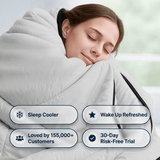
Sleep is worth singling out, because it's where a lot of actual repair happens, and it's the honest link to a different kind of product. A sleep cooling blanket, like the Comfy Sleepers Ice Cooling Blanket, is built to feel cool to the touch and wick moisture so you sleep more comfortably on warm nights. To be clear, that's a very different thing from a cold-therapy ice blanket. It doesn't lower tissue temperature, it isn't a recovery device, and it makes no difference to inflammation or soreness. What it can do is help you stay cool and comfortable while you sleep, and since good sleep is part of how your body recovers, sleeping better is never a bad thing. Just don't confuse the two products, since they do completely different jobs.