

What is the Summer Solstice
Every year, there's one day that stands out from all the rest, not because of a holiday or a season change, but because of something happening far above us, with the Earth and the sun. It's a moment that's been noticed and celebrated by people for thousands of years, long before we had the science to explain it. So what exactly is this day, and why does it matter?
What is the Summer Solstice?
The summer solstice happens when Earth's axial tilt points one hemisphere directly toward the sun at its maximum angle. For the Northern Hemisphere, that's around June 20 or 21 each year.
Here's the thing: it's not just a calendar date. It's a genuine astronomical event where the sun reaches its highest point in the sky at solar noon, and daylight hours peak for the entire year. After this day, the nights slowly start getting longer again.
And that's the whole point. It's a turning point, not just a marker.
Summer Solstice's Impact on Sleep Health
More daylight sounds great until you're lying in bed at 9 pm with sunlight still pouring through your curtains.
The science behind this is pretty straightforward. Melatonin is a hormone produced in your body when it is dark. It makes you sleepy. Your brain gets confused when daylight goes past 8 or 9 pm. Melatonin production slows down. You are awake when you should not be.
| Sleep Factor | Summer Solstice Impact |
|---|---|
| Melatonin production | Delayed due to extended daylight |
| Sleep onset time | Can push 30-90 minutes later |
| Sleep duration | Often shortened by earlier sunrises |
| Sleep quality | Lighter sleep is reported more frequently |
| Body temperature | Higher ambient temperatures disrupt deep sleep |
Real talk, the solstice period is genuinely one of the hardest times of year to maintain a solid sleep routine. It's not just in your head.
When is the Summer Solstice in 2026?
The Summer Solstice is Happening on June 21 in 2026
Mark it down. June 21, 2026, is the summer solstice for the Northern Hemisphere. The exact time varies slightly based on your time zone, but the date stays consistent.
Why Do They Call a Solstice "a Solstice"?
The word comes from Latin. "Sol" means "sun", and "sistere" means "to stand still". So a solstice is literally the moment the sun appears to pause in its path across the sky before reversing direction.
For a day or two around the solstice, the sun rises and sets at nearly identical positions on the horizon. It looks like it's standing still. Ancient civilizations noticed this long before anyone had the vocabulary to explain it astronomically.
Is the Summer Solstice the Beginning of Summer?
Depends on who you ask, honestly.
Astronomically, yes. The summer solstice marks the start of astronomical summer. But meteorologically, which is how weather scientists organize seasons, summer begins June 1 in the Northern Hemisphere.
| Season Definition | Summer Starts |
|---|---|
| Astronomical | June 20-21 (solstice) |
| Meteorological | June 1 |
| Cultural (US) | Memorial Day weekend |
So when someone says "first day of summer", they could mean any of these. Fair enough.
Why Is the Solstice Not the Start or End of the Year?
You'd think the longest day would feel like a natural reset point. But our calendar year runs from January 1, which traces back to Roman calendar reforms under Julius Caesar, and later adjustments by Pope Gregory XIII.
Before those reforms, various cultures did treat solstices and equinoxes as significant year markers. Some still do. But the modern Gregorian calendar we all follow today just doesn't align with astronomical events like that.
And that's okay. The solstice still gets its moment, just not a public holiday on most calendars.
Why Are Days Shorter in the Winter Time?
It's the same reason days are longer in summer, just flipped.
Earth orbits the sun on a tilted axis, about 23.5 degrees. In summer, your hemisphere tilts towards the sun, getting more direct exposure over more hours. In winter, it tilts away. The sun rises lower in the sky, takes a shorter arc, and sets earlier.
So it's not that the days are actually shorter; the Earth still rotates every 24 hours. It's that the portion of that rotation spent in sunlight shrinks significantly.
What Is the Meaning of 'The Longest Day'?
The longest day refers to the day with the most daylight hours in the year. In the US, that's the June solstice.
Depending on where you live, this can mean anywhere from 14 to over 16 hours of daylight. Northern states like Minnesota or Montana see noticeably longer days than Florida or Texas. The further north you go, the more dramatic the difference.
Some places north of the Arctic Circle experience no darkness at all around the solstice. The sun just keeps circling. That's the midnight sun phenomenon, and it genuinely messes with sleep in ways that are hard to describe unless you've experienced it.
How to Use a Cooling Comforter for Better Sleep During Summer
Extended daylight isn't your only enemy during summer, Heat is. Your body needs to drop its core temperature by about 1-2 degrees Fahrenheit to fall into deep sleep, and that's harder when the room stays warm.
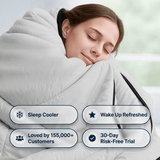
A cooling comforter works by allowing heat to escape rather than trapping it. The lighter the weight and the more breathable the fabric, the better it supports that natural temperature drop.
To Get the Most Out of Your Cooling Comforter, Try These Tips
Maintain a Cool Bedroom
Set your thermostat between 65-68°F if possible. That range consistently shows up in sleep research as the sweet spot for most adults. A cooling comforter works best when the ambient room temperature supports it, not fights against it.
Darken Your Room
Blackout curtains aren't just for shift workers. During the solstice period, blocking that late evening and early morning light makes a measurable difference in melatonin timing. Your comforter handles the temperature side, but darkness handles the hormonal side.
Consistent Sleep Schedule
Don't let the extended daylight push your bedtime an hour later every night. Your circadian rhythm doesn't adjust as fast as the sunset does. Keeping a consistent sleep and wake time, even when it's still bright outside, is one of the most effective things you can do for summer sleep quality.
Final Thoughts
The summer solstice is one of those things most people experience every year without really noticing it. But your body notices. Sleep gets harder, nights feel shorter, and the heat compounds everything. Knowing why that happens is half the battle. The other half is just setting up your environment to work with your biology instead of against it. Small changes, real difference.