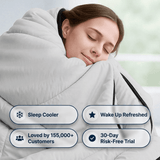


Why Does a Cooling Blanket Feel Sticky or Clammy?
You bought a cooling blanket to feel fresh at night, and now it’s clinging to your legs. That’s frustrating, and it’s easy to assume you got a bad one.
It’s not the blanket’s fault. A cooling blanket can feel sticky or clammy when moisture stays between your skin and the fabric. Humidity, sweat, and airflow all affect how that feels, and each one is something you can look at.
Why Can a Cooling Blanket Feel Sticky?
Your skin releases moisture as you sleep, even when you don’t feel sweaty. If that sweat can’t get away, it stays against your skin and creates that clammy feeling.
The fabric’s surface matters too. A very smooth fabric can sit flat against damp skin and feel like it’s clinging, while a textured one may touch you in fewer places. Depending on the fabric and how damp you are, the same blanket may feel silky one night and sticky the next. Where you touch it matters as well. Areas where skin presses against the blanket, like the backs of your knees, have less air around them, so moisture has fewer ways to escape.
And here’s the key point: cooling doesn’t automatically mean moisture-wicking. A blanket can feel cool to the touch and still not deal with sweat very well.
How Humidity and Sweat Affect Comfort
Sweat only cools you when it can evaporate. NOAA explains that high humidity slows evaporation, which takes away one of the ways your body cools itself.
So in a humid room, sweat stays on your skin for longer. Trapped moisture can then make both your skin and the blanket feel clammy, even if the fabric felt cool when you first got in. Warm bedding can add to it. If a thick layer is holding in heat, you may sweat more, and that moisture then has even less chance to evaporate.
This varies from person to person. Some people sweat much more than others at night, and rooms differ a lot too. A blanket that feels fine in a dry bedroom may feel very different in a humid one.
Cooling vs. Breathable vs. Moisture-Wicking Fabrics
These three words often get mixed together, but they mean different things.
- Cooling: The sensation of feeling cool against your skin.
- Breathable: How well air moves through or around a fabric.
-
Moisture-wicking: Fabric designed to move moisture away from your skin.
A blanket may offer one, two, or all three, but you can’t tell from the word “cooling” alone. So look at each claim separately. It’s also why two blankets labeled “cooling” can feel completely different on the same night. One may feel crisp, while another clings.
For example, Comfy Sleeper’s Ice Calming Cooling Blanket uses moisture-wicking fabric and cooling fibers.
How to Reduce a Sticky or Clammy Feeling
A few simple changes may help:
- Improve ventilation: Open a window or run a fan to keep air moving.
- Keep it clean: Sweat and body oils can build up on fabric over time.
- Dry it fully: A blanket that’s still slightly damp will only add to the problem.
- Follow the care label: Avoid products the label warns against.
- Try less bedding: A lighter covering or more airflow may feel better for some people.
-
Start dry: Drying your skin fully after a shower gives you a better start, and light, loose sleepwear can keep fabric from sitting on damp skin.
Also look at the room as a whole. The EPA suggests keeping indoor humidity below 60 percent, and ideally between 30 and 50 percent, using an air conditioner or dehumidifier if needed.
What to Check When Choosing a Cooling Blanket
If you’re shopping for a new blanket, check:
- Fabric composition: Is it clearly listed, and is it consistent across the page?
- Performance claims: Are breathability and moisture management clearly stated?
- Washing instructions: Will the care routine work for you?
-
Customer feedback: What do reviewers say about how the fabric feels?
If a page gives conflicting details, ask the brand before you buy.
Then think about where you’ll use it. A blanket for a humid bedroom need different strengths than one for a dry, air-conditioned room. Choose based on your room and what feels comfortable to you, not just the words on the label.
FAQs
Can a cooling blanket make you sweat?
A blanket can hold in some warmth like any other covering, so you may still sweat, especially in a warm or humid room.
Does cooling fabric wick moisture?
Not always. Cooling describes a feeling, and wicking describes moving moisture. Some fabrics claim both, so check the product details.
Why does my blanket feel damp at night?
It may be sweat that can’t evaporate quickly, especially when humidity is high or airflow is low. Make sure the blanket is fully dry before you use it, too.
Keeping the Clammy Feeling Away
That sticky feeling usually comes down to moisture, humidity, and how the fabric sits against your skin. A cool touch doesn’t automatically mean a blanket will manage sweat, so it’s worth reading the claims closely.
Start with airflow and a clean, dry blanket. If you’re looking for a new one, you can compare details on the Ice Calming Cooling Blanket page, which comes with 30-night returns.