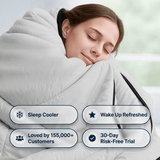



9 Tips on How to Stay Cool While Sleeping
You've just finished a 10-hour night shift. The sun's coming up, your neighbors are starting their day, and you're supposed to sleep. But your brain won't shut off, your eyes sting, and honestly - your whole body feels wrong. Sound familiar?
1. Choose Breathable, Moisture-Wicking Bedding
Most standard cotton sheets - the kind that come with apartment bedding sets - trap heat and hold moisture against your skin. That's why you wake up damp and uncomfortable even when the room isn't particularly warm.
Switching to fabrics that actively move moisture away makes a significant difference. Bamboo is a solid choice; it has a natural breathability that cotton just doesn't match. Linen is another one - it feels almost cool to the touch and gets softer with every wash. The goal is fabric that pulls sweat away from your body and allows it to evaporate rather than sitting there making you feel sticky all night.
Honestly, this single swap alone is something most hot sleepers notice immediately.
2. Keep Your Bedroom Cool
Your body can't cool itself down efficiently if the room is working against it. Sleep researchers consistently point to 60 to 67 degrees Fahrenheit as the sweet spot for most adults. That might sound colder than what you're used to, but your body genuinely does better there.
No AC? Fair enough - fans help more than people give them credit for. A ceiling fan running counterclockwise in summer pushes air downward and creates a wind chill effect. A box fan in the window pulls warm air out. And during the day, keeping blinds or curtains closed prevents your room from absorbing heat in the first place, so you start the night at a lower baseline temperature.
3. Layer Smartly with Lightweight Bedding
Here's something counterintuitive: sometimes adding a thin extra layer is better than trying to sleep under one heavy blanket. The heavy blanket holds heat uniformly against your whole body. Lighter layers you can kick off partially - or fully - let you adjust on the fly without waking up completely.
Start with a lightweight breathable sheet directly against your skin. Add a thin quilt or coverlet on top if you want something over you. Natural fibers work better than synthetic ones for this. Polyester fills tend to trap heat; down alternatives and cotton quilts breathe more freely and let your body regulate instead of fighting against a sealed thermal layer.
4. Opt for Light-Colored Bedding
This one might feel minor, but it adds up. Dark-colored fabrics absorb and store heat during daylight hours, especially if your bed gets any sun exposure through a window. By evening, dark sheets can hold noticeably more warmth than lighter ones.
White, cream, light gray, soft blue - these shades reflect heat rather than absorb it. And there's something about a lighter-colored bed that just looks cooler. It sets a psychological tone for the room that actually influences how you feel when you get in. And that's okay to admit.
5. Improve Airflow Under and Around Your Bed
Most people don't think about this one. But the space beneath your mattress matters.
If your mattress sits directly on the floor, heat collects under it and radiates upward all night. A slatted bed frame - where air can move through the base - helps dramatically. Even a solid platform frame with a few inches of clearance underneath makes a difference compared to floor-level sleeping.
If you've got a fan, pointing it toward the lower half of the bed rather than directly at your face actually does a better job of cooling the sleep surface. Air moving around the mattress keeps temperatures lower where your body generates the most heat.
6. Sleep in Lightweight, Moisture-Wicking Pajamas
What you wear to bed matters almost as much as what you sleep under. Heavy flannel pajamas in summer - real talk, it's just not working for you. They hold heat and block your skin's ability to cool itself naturally.
Lightweight options in breathable fabrics - loose cotton, bamboo, or moisture-wicking athletic blends - let sweat evaporate instead of pooling against your skin. Some people find sleeping with less on works best. Others prefer a thin layer for comfort. Either way, the principle is the same: less barrier between your skin and the air around you means faster, more efficient cooling.
7. Upgrade to Cooling Pillows and Mattress Toppers
Your pillow absorbs body heat all night long. If yours is a dense foam option, it's probably holding that heat and radiating it back at your head and neck - which is one of the main areas where overheating starts for a lot of sleepers.
Cooling pillows use materials like gel-infused foam, latex, or shredded fills with more airflow to dissipate heat rather than store it. Mattress toppers work similarly - a gel memory foam or latex topper sits between you and a mattress that might otherwise trap heat, helping regulate the surface temperature where it actually matters.
8. Avoid Heavy Meals, Caffeine, and Alcohol Before Bed
Your body generates heat while it digests food. A big meal within two or three hours of bedtime means your metabolism is running higher right when you're trying to cool down and sleep - the exact opposite of what you need.
Caffeine keeps your nervous system activated and raises core body temperature. Alcohol is sneakier; it initially lowers temperature, but as it metabolizes it causes a rebound effect that wakes you up hot in the middle of the night. So even if you fell asleep fine, the alcohol is coming back to get you around 2 or 3 AM.
Light snacks are fine. Herbal tea, water, tart cherry juice - all solid options. Just keep it small and give yourself time before bed.
9. Reduce Humidity and Enhance Ventilation
Heat alone isn't always the enemy. High humidity is often what tips the experience from "a bit warm" to genuinely miserable. When the air is heavy with moisture, sweat can't evaporate from your skin properly, and your body's cooling system essentially stops working.
A dehumidifier in the bedroom can make summer nights dramatically more bearable, even without significant temperature changes. Cross-ventilation - opening windows on opposite sides of a room to create airflow - works well on cooler nights. An air purifier with good circulation also keeps air moving, which both lowers perceived temperature and reduces the kind of stale, humid air that makes you feel hot even when the thermostat says otherwise.
Smaller rooms with less airflow tend to hold humidity higher. If that's your situation, the dehumidifier is probably the highest-impact addition you haven't tried yet.
Final Thoughts
Sleeping cool isn't really about any single tip. It's a whole environment - bedding, temperature, airflow, what you eat and drink - working together. Some of these changes are free (opening a window, switching to lighter layers). Others cost a little. But honestly, the difference between a sweaty, broken night of sleep and a genuinely cool, restful one is worth more than most things you'd spend money on.