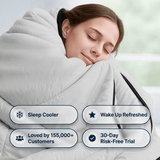


And for some, it’s stress, spicy food, room temperature, or even the wrong bedding trapping body heat.
Every small trigger adds up, leaving you tossing, turning, and desperate for a good night’s sleep.
Discover our best selling products

Sometimes our bodies naturally heat up as we fall asleep. For women, hormonal fluctuations, especially changes in estrogen and progesterone, can confuse the body’s thermostat, while natural nighttime rises in core temperature make hot flashes and night sweats more likely.
For men, higher muscle mass and metabolism produce extra body heat, and shifts in testosterone or stress hormones like cortisol can raise temperature, leaving both men and women tossing, turning and struggling to stay cool & comfortable, which wrecks deep sleep.
And for some, it’s stress, spicy food, room temperature, or even the wrong bedding trapping body heat.
Every small trigger adds up, leaving you tossing, turning, and desperate for a good night’s sleep.

Most people try obvious fixes, turning up the AC, using a fan, sleeping with thin sheets, but none of those help your body regulate its own temperature.
Your body doesn’t need more cold; it needs balance.


Aggressive scrubbing creates microscopic tears, triggering inflammation that makes your body produce MORE keratin as protection. We were literally making the problem worse.
Steroids reduce inflammation quickly but thin the skin and create dependency. When patients stopped, KP returned worse because we never fixed the root cause.
We attacked keratin plugs while ignoring skin barrier repair. Without fixing the barrier, we were emptying the bathtub with the faucet still running.
High-dose single acids either caused irritation or were too weak to penetrate effectively. KP needs multiple ingredients working together.
We attacked bumpy skin instead of asking why skin cells don't shed properly. KP is a cellular communication problem, not just a keratin problem.
Your body has a natural thermostat that controls your temperature while you sleep. When it senses heat, it cools you down with sweat and blood flow. But sometimes that thermostat gets confused; hormones, stress, or even a warm room can trick your body into overheating.
Fans, frozen sheets, and ice packs might make you feel cool for a moment, but they don’t fix the problem. Your body still struggles to regulate itself, leaving you sweaty, restless, and exhausted.


