


Latex vs Memory Foam Pillow: Differences and Benefits
Choosing the right pillow makes more of a difference than you think. It’s not just about being comfortable - it’s also about the quality of your sleep and how you feel after waking up. Two of the most talked-about pillow types are latex and memory foam, and while they may appear similar on a store shelf, they feel totally different when you’re actually sleeping on them.
So, this guide takes you through what differentiates them and what each is offering. No puffery, no rosy medical claims - just cold facts so you can decide which one might prove more effective for you.
Latex Pillows
Latex pillows are made from latex rubber, which is derived from the sap of rubber trees. Some contain only pure natural latex, while others include some synthetic latex manufactured in a lab. The defining characteristic of a latex pillow, whichever type it is, is its responsiveness and how well it retains its form.
What you should pay attention to about latex pillows:
They feel springy and responsive
Air moves through them easily
They keep your head up without sinking too low
Memory Foam Pillows
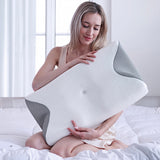
butterfly memory foam pillows are of viscoelastic foam - a material that responds to heat and pressure by contouring, then slowly returning to its original shape when you move. It was originally designed for use in space travel, before anyone considered it for bedding.
What stands out about memory foam:
They are designed to fit the shape of your head and neck
It has denser material than most regular pillows
It bounces back when you shift around or change position
Key Differences Between Latex and Memory Foam Pillows
1. Feel and Support
The quality of latex is lively and bouncy. You can feel it gently pushing back when you lay your head on it. The pillow quickly reshapes itself when you move, and your head doesn't sink in very much.
Your head and neck are wrapped in memory foam, which leaves a noticeable indentation where you lie. It briefly maintains that shape before progressively reverting to its original state. It has the effect of being tenderly held.
In other words, memory foam feels like it's hugging your head, while latex is supportive and springy.
2. Temperature and Breathability
Latex lets air move through it better than dense foam. Many latex pillows have tiny holes or an open structure built in, which helps keep things from getting stuffy. The surface tends to stay more breathable while you sleep.
Traditional memory foam can trap heat because of how dense it is. A lot of memory foam pillows now come with cooling features - gel mixed in, ventilation channels, things like that - to try and fix this issue.
3. Resilience and Movement Response
Latex bounces back into shape the second you shift or lift your head. This quick recovery gives it a lively feel that moves with you.
Memory foam bounces back a little slowly after you move. It creates that "sinking in" sensation, but you won't get the immediate bounce that latex gives you.
4. Sturdiness and longevity
Latex pillows are known for maintaining their support and shape over time, but both varieties can outlast conventional polyester pillows. Memory foam is also long-lasting, but as it ages, its slow-rebound characteristics may alter slightly.
5. Synthetic vs. Natural Materials
Natural latex comes from the sap of rubber trees. It is considered to be more sustainable than entirely synthetic alternatives. To achieve the right amount of price compared to performance, certain latex pillows weave natural and synthetic latex together.
Synthetic memory foam is produced in a factory by chemical processes. Manufacturers adjust the different memory foam types with the Dead Sea Scrolls formulas to achieve specific comfort and performance results.
Even though some people care deeply about it, having the material from one source or another doesn’t always make anybody more comfortable than the other.
A simple look at what sets them apart:
|
Feature |
Latex Pillow |
Memory Foam Pillow |
|
Feel |
Bouncy, responsive |
Slow-contouring, sink-in feeling |
|
Support |
Consistent and springy |
Adaptive, hugs your shape |
|
Pressure Relief |
Moderate |
Strong pressure relief |
|
Temperature |
Often cooler |
Can trap heat |
|
Motion Isolation |
Moderate |
Excellent |
Choosing Between Latex and Memory Foam
There's no universal "right" answer here. What works for you depends on how you sleep and what you find comfortable.
Think about it this way:
Do you like a bouncier feel? Latex is probably your pick.
Do you want that hugging, cradled sensation? Memory foam delivers that.
Do you sleep hot? Latex's natural airflow might feel lighter and less stuffy.
Do you want the pillow to mould to your exact shape? Memory foam's contouring quality does exactly that.
Care and Maintenance Tips
Both latex and memory foam pillows last longer when you take basic care of them:
Use a pillowcase you can wash regularly
Air out the pillow now and then to keep it fresh
Follow whatever cleaning instructions the manufacturer gives you
Don't fold or squash the pillow too much - it can mess with the structure
Everyday Comfort Tips
Here are a few real-world pointers when choosing between the two:
Sleep position matters: Side sleepers may like contouring pillows more, whereas back sleepers may prefer responsive lift.
If heat bothers you, airflow and breathability are worth paying attention to.
If you move a lot during sleep, a pillow that quickly regains shape can feel more comfortable over the night.
Try a pillow with a removable cover so you can wash it easily.
Final Thoughts
Neither pillow type is going to solve specific health issues or guarantee you'll wake up feeling like a new person. But both are designed to give you a more comfortable surface to sleep on than traditional pillows stuffed with polyester fill.
Read More About : Butterfly Pillow vs Flat or Standard Pillow for Long-Term Comfort