

Cooling Blanket for Night Sweats: What to Look For
Waking up in the middle of the night damp and uncomfortable is one of those things that sounds minor until it's happening to you every night. Choosing the right cooling blanket for night sweats can completely change how you sleep through hot, restless nights.
Night sweats disrupt sleep in a way that compounds over time. One bad night is manageable. Weeks of interrupted sleep is something else entirely. And for a lot of people, the first thing they reach for is their bedding, because what you're sleeping under is often a significant part of the problem.
A breathable cooling blanket is one of the most practical bedding changes for people dealing with night sweats. But not every blanket marketed as cooling is built for this specific situation. Here's what to actually look for.
What Causes Night Sweats
Before getting into blanket features, it's worth understanding why night sweats happen.
Night sweats can be caused by a range of factors. Hormonal changes, including those related to menopause and perimenopause, are among the most common. This is why a cooling blanket for menopause is one of the most-searched bedding solutions among women over 40. Certain medications, anxiety, thyroid conditions, and sleep environment temperature all play a role.
For some people, night sweats are primarily a bedding problem. A blanket that traps heat creates a progressively hot environment at night. By 2am, the body is trying to cool itself down against bedding that's holding warmth in. The result is sweating that wakes you up. A cooling blanket for hot flashes works the same way , by removing trapped heat rather than insulating against it.
What to Look For in a Cooling Blanket for Night Sweats
Breathable Construction
This is the most important feature. And it's the one that gets glossed over most often in product descriptions.
A breathable blanket allows air to circulate through the fabric rather than creating a sealed layer against the body. That airflow is what prevents the heat build-up that contributes to night sweats in the first place. A well-designed breathable cooling blanket keeps that airflow consistent through the entire night, not just the first hour.
Look specifically for how the breathability is described. "Open weave" and "breathable fibre structure" are meaningful construction descriptors. "Breathable" as a standalone marketing word without supporting detail is worth questioning.
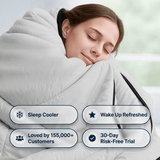
The cooling blanket uses breathable fibres that allow heat to pass through rather than trapping it against the skin. The construction is designed specifically for warm sleepers who need airflow maintained through the night, not just for the first hour.
Cool-to-Touch Fabric
A breathable blanket and a cool-to-touch blanket aren't the same thing, though the best ones are both. A true cool-to-touch blanket starts feeling cooler the moment it contacts your skin and keeps that sensation working as you resettle through the night.
Cool-to-touch refers to the immediate sensation when the fabric contacts skin. It's measured by something called a Qmax rating. Standard cotton sits at around Qmax 0.14. Higher-performance cooling fabrics sit at 0.25 and above. The higher the Qmax, the more quickly the fabric draws warmth away from the skin on contact.
This matters for night sweats because the cool-to-touch feel isn't just pleasant at bedtime. It also provides a cooling sensation when you wake up warm in the middle of the night and the blanket contacts your skin again as you resettle.
Lightweight Design
A heavy blanket adds warmth through its weight alone, regardless of the fabric's cooling properties. For night sweat sufferers, a lightweight cooling blanket is non-negotiable.
Weight is measured in grams per square metre (GSM). For a cooling blanket designed for night sweats, lower GSM is better. The blanket should sit against the body without adding pressure or bulk that creates additional warmth.
The cooling blanket is lightweight by design. It's built to sit without adding weight to the sleep environment, which means the cooling properties of the fabric aren't offset by the blanket's mass.
Hypoallergenic Materials
This consideration matters more than most people expect for night sweat sufferers.
Night sweats create a damp sleep environment. Damp environments are more hospitable to dust mites and allergens. A blanket made from hypoallergenic materials reduces that risk and is generally a more comfortable option for anyone with sensitivities.
Easy Washability
A cooling blanket for night sweats is being washed frequently. That's the reality.
A blanket that requires specialist dry cleaning or delicate hand washing isn't practical for this use case. Look for machine washable on a gentle cycle and tumble dry low as the minimum care standard.
The cooling blanket is machine washable and designed to maintain its cooling properties through regular laundering when care instructions are followed. Cold wash, gentle cycle, mild detergent, low heat drying. The cooling fibres are woven into the fabric so they don't wash out over time.
Size Options
Coverage matters. A cooling blanket that's too small leaves parts of the body uncovered, which defeats the purpose if heat is building up in uncovered areas through the night.
The cooling blanket is available in Single, Double, Full/Queen, and King/Cali King. Choosing the right size for your bed ensures consistent coverage through the night regardless of how much you move in your sleep. The best cooling blanket for night sweats is the one that covers your whole body without bunching up at the edges.
What Won't Help
It's worth being honest about what a cooling blanket can and can't do for night sweats.
A cooling blanket is one practical tool in a broader approach to sleep comfort. Used alongside other adjustments like room ventilation and breathable sleepwear, most hot sleepers find it makes a meaningful difference to how often they're waking up warm through the night but it will not work without AC - it's just that we wouldn't need to blast AC all night.
Night sweats are manageable, especially when the bedding isn't making them worse. A well-chosen cooling blanket for night sweats works with your body rather than against it, staying light, breathable, and cool-to-touch through the night. Browse the cooling blanket range and find the size that fits your bed, with a 30-day satisfaction guarantee on every order.
FAQ Section
1. Does a cooling blanket help with night sweats?
Yes, a quality cooling blanket helps reduce night sweats by allowing body heat to escape instead of trapping it like a regular comforter. The breathable fibres and cool-to-touch fabric keep your skin temperature steady, so you don't overheat between sleep cycles. It won't stop the medical cause of night sweats, but it makes the bedding side of the problem much easier to manage.
2. What kind of blanket should I use for night sweats?
The best blanket for night sweats is lightweight, breathable, hypoallergenic, and cool-to-touch. Look for a low GSM (grams per square metre) and a Qmax rating of 0.25 or higher for proper cooling. Avoid heavy fleece, thick microfibre, or weighted blankets , they trap heat and make night sweats worse.
3. Is it worth buying a cooling blanket?
Yes , for anyone dealing with night sweats, hot flashes, or general overheating at night, a cooling blanket is one of the most cost-effective bedding upgrades you can make. It improves airflow, reduces wake-ups, and lasts for years with proper care. Most quality cooling blankets also come with a sleep trial, so you can test it risk-free before committing.
4. What is the best bedding for menopause night sweats?
For menopause night sweats, the best bedding is a breathable cooling blanket paired with light, moisture-wicking sheets and a cool-to-touch pillowcase. The goal is to keep airflow moving and prevent heat buildup at any point on the bed. A lightweight cooling blanket with a high Qmax rating is the single most impactful upgrade for menopausal night sweats.